
The 1990s gave action cinema a strange and wonderful gift. It was a decade where a bus could not slow down, a cyborg could learn to cry, and a wrongfully convicted doctor could jump off a dam and somehow become the hero. The action movies of the 90s were not just louder than the 80s. They were smarter, stranger, and more willing to mix real human emotion into the explosions.
This list is not a ranking of box office numbers or critic scores. It is a look at the films that defined what action meant during those ten years. Some are obvious classics. A few might surprise you. All of them are worth your best action movies of the 90s.
Why the 90s Matter for Action Movies?
The 80s built the action star. Stallone and Schwarzenegger turned muscle and one-liners into a formula. The 90s took that formula and broke it open. Directors like John Woo brought a poetry to violence that Hollywood had not seen before . James Cameron proved a sequel could be better than the original and carry real emotional weight. A filmmaker named Michael Bay arrived at the end of the decade with a style that would dominate blockbusters for years.
The decade also gave us something unexpected. Action heroes started to feel. They had families. They made mistakes. Keanu Reeves became a star not because he looked invincible, but because he looked scared and kept going anyway. That shift matters. It is why these films still hold up.
Read Also: Our One Battle After Another Movie Review: A Must-See Masterpiece
Terminator 2: Judgment Day (1991)
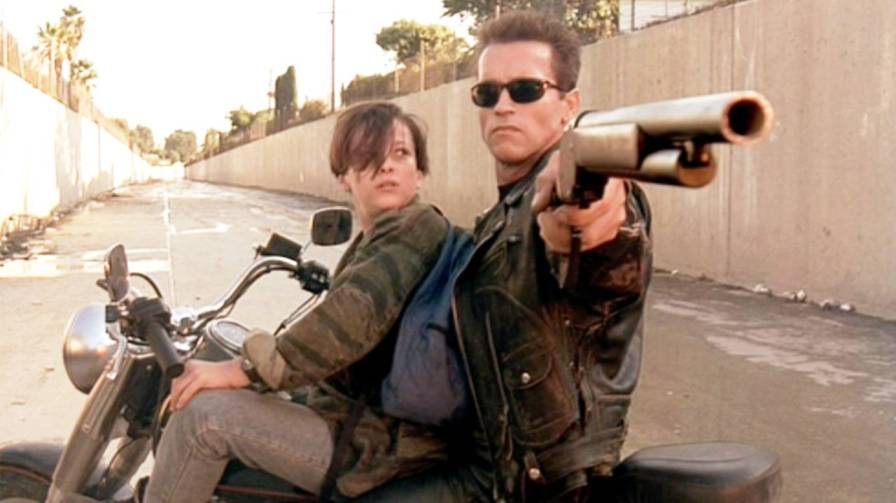
James Cameron did something rare with this sequel. He took a villain everyone loved to fear and turned him into a protector. Arnold Schwarzenegger's T-800 is still a machine. He still speaks in short, flat sentences. But the film asks a question the original never bothered with: can a machine learn to understand why humans matter?
Linda Hamilton's Sarah Connor is the real heartbeat here. She is not the scared waitress from 1984 anymore. She is hardened, furious, and absolutely certain of what needs to be done. The scene where she breaks down in the mental hospital, trying to pull her son close while her arms are restrained, is more intense than any shootout . The action still works. The truck chase through the LA riverbed. The liquid metal of the T-1000 reforming after every hit. But the film lingers because it is about a mother trying to save her child from a future she already watched unfold.
Hard Boiled (1992)
John Woo made this film in Hong Kong before he came to Hollywood. It is the movie that proves action can be choreographed like music. Chow Yun-fat plays Tequila, a cop who survives a shootout that kills his partner and spends the rest of the film trying to make it right .
What makes Hard Boiled special is not the body count. It is the way Woo films violence. Slow motion. Doves flying through a warehouse. Two men holding guns in perfect symmetry. A single take that follows Tequila through a hospital corridor, firing and reloading and moving with a rhythm that feels almost like dance. American action movies in the early 90s did not look like this. Woo showed that a gunfight could be beautiful in a way that was unsettling. It is not realistic. It is not supposed to be. It is pure style, and it changed the language of action for everyone who followed .
The Fugitive (1993)
Harrison Ford does not throw many punches in this film. He runs. He hides. He thinks. The Fugitive is proof that an action movie does not need a bodybuilder or a martial artist to work. It needs a man who is smart and desperate and has nothing left to lose .
The train crash in the opening act is still one of the most impressive practical sequences ever put on film. A real locomotive. Real wreckage. Ford's Dr. Richard Kimble escapes into the woods, and the movie becomes a chase. Tommy Lee Jones as Deputy Marshal Samuel Gerard is the perfect foil. He is not a villain. He is just very good at his job, and he enjoys it. The "I don't care" moment before Kimble jumps into the dam spillway is a line Jones improvised . That small detail tells you everything about why this movie works. It feels alive in a way that most studio thrillers do not.
Speed (1994)
Jan de Bont was a cinematographer before he directed this. You can feel that in every frame. Speed is not a complicated movie. A bus has a bomb on it. If it goes below fifty miles per hour, it explodes. That is the whole premise. But the film commits to it fully, and that commitment is what makes it great .
Keanu Reeves plays Jack Traven as a cop who is not the toughest guy in the room. He is just the one who will not stop. Sandra Bullock brings warmth and humor to a role that could have been flat. The chemistry between them is real. The film also understands pacing in a way few action movies do. It opens with an elevator set piece, moves to the bus, and then shifts to a subway train for the finale. Each section escalates. There is no downtime. No filler. Speed is ninety minutes of forward motion, and it never gets old.
You May Also Like: Top 10 Best Action Tv Shows To Watch Now
Die Hard with a Vengeance (1995)
The third Die Hard film is the best of the sequels because it remembers what made the first one work. John McClane is not a superhero. He is a guy with a headache and a bad attitude who happens to be in the wrong place at the right time. This time, Jeremy Irons plays Simon, a villain who calls McClane on a payphone and makes him run around New York City solving puzzles.
Samuel L. Jackson enters the picture as Zeus, a shop owner who gets pulled into the chaos and spends most of the film furious at McClane. Their arguing is the best part of the movie. The action is bigger than the first film, but the core is still McClane getting hurt and getting back up. The scene where they solve the water jug puzzle while a bomb is ticking is somehow more tense than the helicopter crash later. That is the magic of this series. It makes the small moments matter just as much as the big ones.
The Rock (1996)
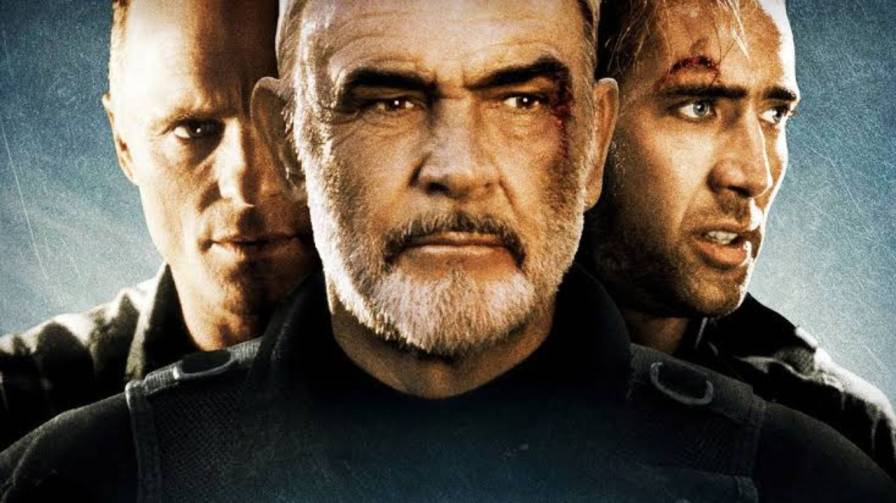
Michael Bay's second film is the one where his style actually served the story. Nicolas Cage plays Stanley Goodspeed, a chemical weapons expert who has never fired a gun in his life. Sean Connery plays John Mason, a man who has been in prison for decades and knows Alcatraz better than anyone alive. They have to break into the prison to stop a group of rogue Marines from launching nerve gas at San Francisco .
The Rock works because it is funny without being a comedy. Cage is terrified for most of the movie, and that is the point. He is not an action hero. He is a nerd who has to pretend to be one. Connery brings weight and charm and a sense of history. The film is also beautifully shot. The green flares in the Alcatraz shower room. The chase through the streets of San Francisco with a Humvee and a Ferrari. It is loud and ridiculous and completely aware of what it is.
Face/Off (1997)
John Woo's second Hollywood film is his strangest and most personal. John Travolta and Nicolas Cage swap faces. Literally. Surgery. A manhunt. The whole thing is absurd on paper. But Woo directs it with absolute sincerity, and that is why it works .
Travolta plays Sean Archer, an FBI agent obsessed with catching Castor Troy, played by Cage. When Troy is injured and comatose, Archer takes his face to infiltrate his organization. Cage, as Archer-with-Troy's-face, gets to play the villain with a cop's guilt. Travolta, as Troy-with-Archer's-face, gets to be a maniac in a way that is genuinely unsettling. The action is operatic. The church shootout. The mirror sequence. The boat chase at the end. But the film is really about two men who hate each other so much that they cannot stop being each other. That is weird. That is Woo. That is the 90s.
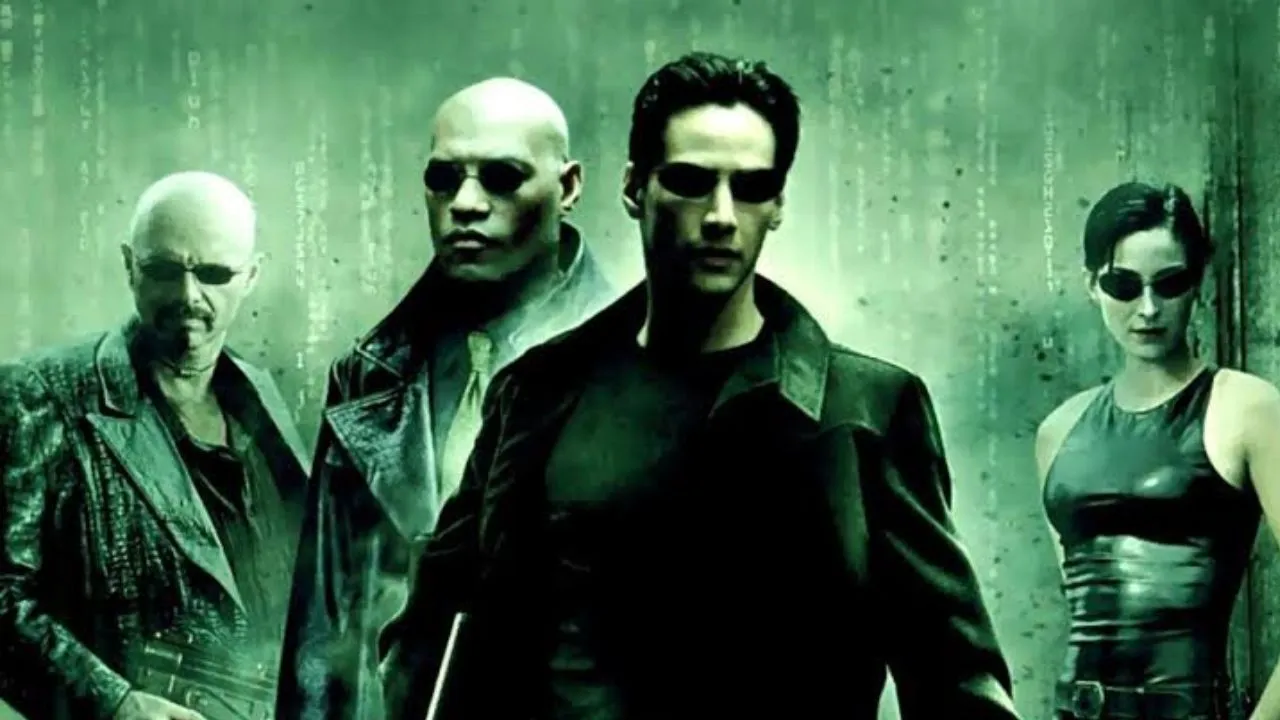
The Matrix (1999)
The last year of the 90s gave us the movie that changed action cinema for the next two decades. The Wachowskis did not invent wirework. Hong Kong cinema had been using it for years. But they combined it with digital effects and a story about reality itself being fake, and the result was something audiences had never seen .
Keanu Reeves as Neo is perfect casting because he looks like a regular person. He is not a soldier. He is a hacker who suspects something is wrong with the world. The lobby shootout. The rooftop chase. The dojo fight between Neo and Morpheus. Every set piece is built around the idea that the rules of physics are negotiable if you believe hard enough. The Matrix is not just a great action movie. It is a movie about why action movies matter. The choice to fight. The choice to believe. The choice to dodge a bullet by wanting it badly enough. That is the 90s in a nutshell.
Final Thoughts
The best action movies of the 90s share one thing. They take themselves seriously enough to care. Terminator 2 cares about a mother and son. The Fugitive cares about a man who lost everything. The Matrix cares about a nobody who might be somebody. The action is the point, yes. Explosions. Gunfights. Car chases. But the reason we remember these films twenty years later is not the spectacle.
It is the feeling. The moment John McClane laughs at his own bad luck. The moment Sarah Connor almost gives up. The moment Neo stands up after being shot. That is what the 90s gave us. Action with a pulse.

.jpg)


.jpg)